


I remember the exact moment it hit my buddy, Jim. We were moving a heavy oak dresser—something we’d done a dozen times in our 30s without breaking a sweat. Halfway up the stairs, his grip slipped. His legs buckled. He looked at me, winded and genuinely shocked, and said, “When did I get this weak?” It’s a gut-punch many of us feel after hitting that half-century mark. You look in the mirror and notice the shoulders look a bit narrower, or you realize the groceries feel heavier than they used to. This isn’t just “getting old”—it’s a biological process called sarcopenia. If you’re searching for muscle loss after 50 causes and solutions, you’re likely feeling that same frustration. The good news? You aren’t stuck on a one-way slide to frailty. I’ve spent a decade helping people navigate this exact transition, and the fix is simpler than the “gurus” make it sound.
What You’ll Learn
- The “Anabolic Resistance” trap that makes traditional dieting fail after 50.
- Why your current protein intake is probably 50% lower than what your muscles actually need.
- The specific type of “Time-Under-Tension” training that triggers growth without ruining your joints.
- Natural ways to reprogram how your body handles carbohydrates and amino acids.
Hard Truth About Sarcopenia and Why You’re Losing Size
Let’s call it what it is: after age 30, you start losing 3% to 8% of your muscle mass per decade. Once you cross 50, that rate accelerates like a car heading downhill with no brakes. But why? Most people think it’s just low testosterone or “laziness.” It’s actually more complex. Your body becomes less efficient at turning the food you eat into actual muscle tissue. In the industry, we call this anabolic resistance.
Think of your muscles like a construction site. When you’re 25, the workers are fast, the supplies arrive on time, and the foreman is a genius. After 50, the supplies (amino acids) get lost in transit, and the workers start taking longer lunch breaks. When I first started working with clients in this age bracket, I realized that just “eating more” didn’t work. We had to change the quality of the signals we were sending to the body. If you don’t provide a specific muscle solution, the body defaults to burning muscle for energy while storing fat. High-quality supplementation can help bridge this gap. For instance, I’ve found that Advanced Amino Formula provides the exact ratio of essential aminos that seniors often miss, essentially “waking up” those lazy construction workers.
Hidden Biological Triggers of Muscle Decline
It isn’t just about the weights. Inflammation is the silent killer of muscle tissue. Chronic, low-grade inflammation—sometimes called “inflammaging”—breaks down muscle fibers faster than your body can repair them. I’ve seen guys who train five days a week still lose size because their recovery is non-existent. Their bodies are in a constant state of internal “war.”
Then there’s the insulin factor. As we age, our cells become “deaf” to insulin. Instead of insulin shuttling nutrients into your muscles, it starts dumping them into fat cells. This is why you see the classic “skinny-fat” look: thin arms and legs with a growing midsection. Look, I’m not a doctor, but I’ve looked at enough data to know that if you can’t manage your blood sugar, you can’t keep your muscle. This is where a targeted approach like SLIN becomes a literal lifesaver; it’s designed to help your body actually use those carbs for muscle fuel rather than belly fat. It’s about redirecting the traffic.
Protein Threshold: The Rule You’re Probably Breaking
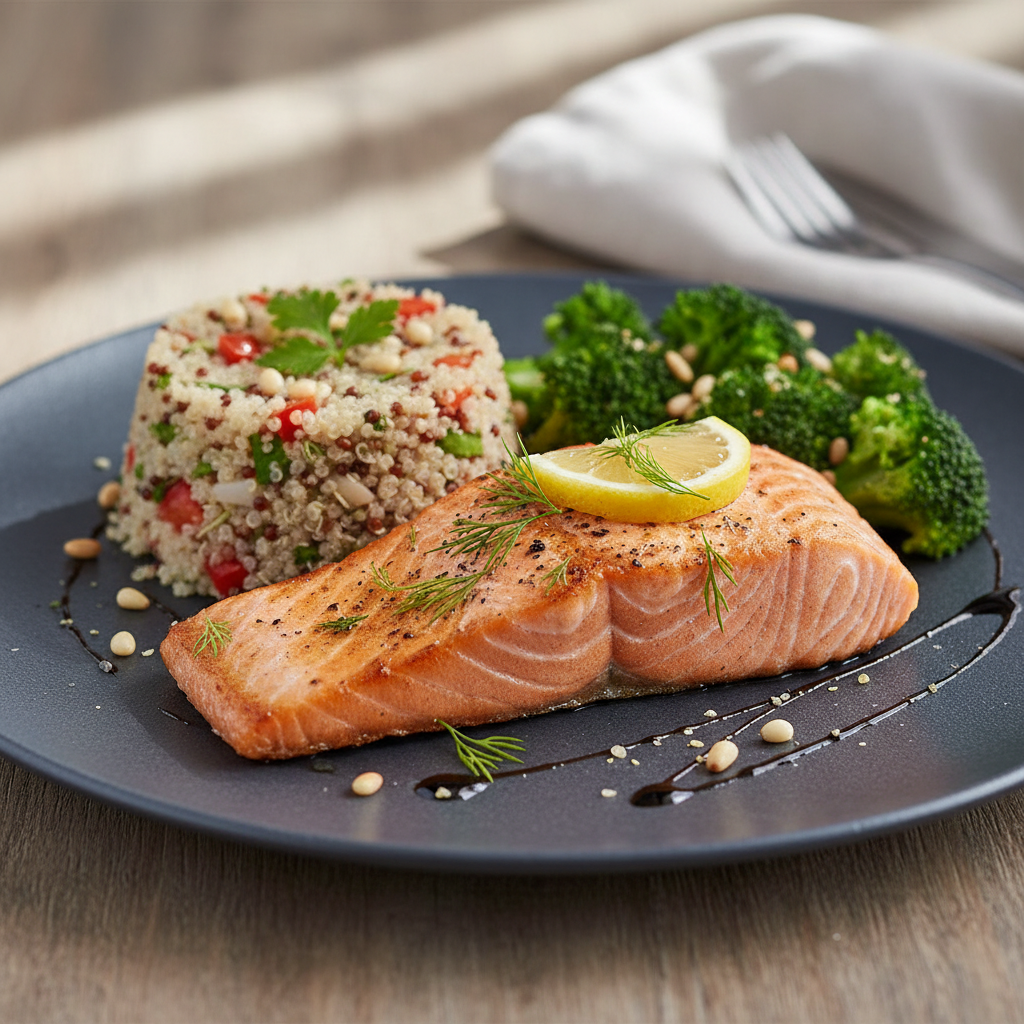
Here is a mistake I see every single day: the “toast and coffee” breakfast. If you are over 50, your “per-meal” protein threshold is higher than it was at 20. You need roughly 30-40 grams of high-quality protein in a single sitting just to trigger Muscle Protein Synthesis (MPS). If you only eat 10 grams, nothing happens. No muscle is built. You’re just idling the engine.
I usually tell my clients to think of protein as a light switch. You have to push it all the way up to turn the lights on. Halfway doesn’t give you “dim” light; it gives you darkness. If you struggle to eat that much meat or dairy, you need a backup. I personally started using Muscle Plus because it targets the specific structural needs of aging tissue that a standard whey shake might miss. It’s about density, not just volume.
“The loss of muscle mass is not just an aesthetic issue; it’s a metabolic crisis. Muscle is your body’s largest glucose sink. Lose it, and your risk for Type 2 diabetes and heart disease skyrockets.” — Dr. Gabrielle Lyon, Functional Medicine Expert
Training for Longevity: Why “Go Heavy or Go Home” is Dangerous
When you’re 52, your tendons and ligaments aren’t as forgiving as they were at 22. Trying to max out your bench press is a fast track to a torn rotator cuff. But here’s the kicker: you still need to challenge the muscle. The muscle solution here is “Mechanical Tension.” You don’t need the heaviest weight in the gym; you need to make the weight you can handle feel heavy.
I switched my entire philosophy to what I call “Slow-Mo Control.” Take 3 seconds to lower the weight, pause, and 2 seconds to lift. This creates massive stimulus without crushing your joints. I remember a client, Sarah, who was terrified of weights because of her arthritis. We started with air squats and light bands. Six months later, her bone density scores improved, and she was carrying her grandkids without back pain. The “secret” was just staying in the 12-15 rep range and focusing on the squeeze. However, even with perfect form, your muscles need the right raw materials to repair that micro-trauma. That’s why I’m such a stickler for something like Advanced Amino Formula; it ensures that the work you do in the gym actually translates to new tissue rather than just soreness.
Role of Hormones and Secondary Factors
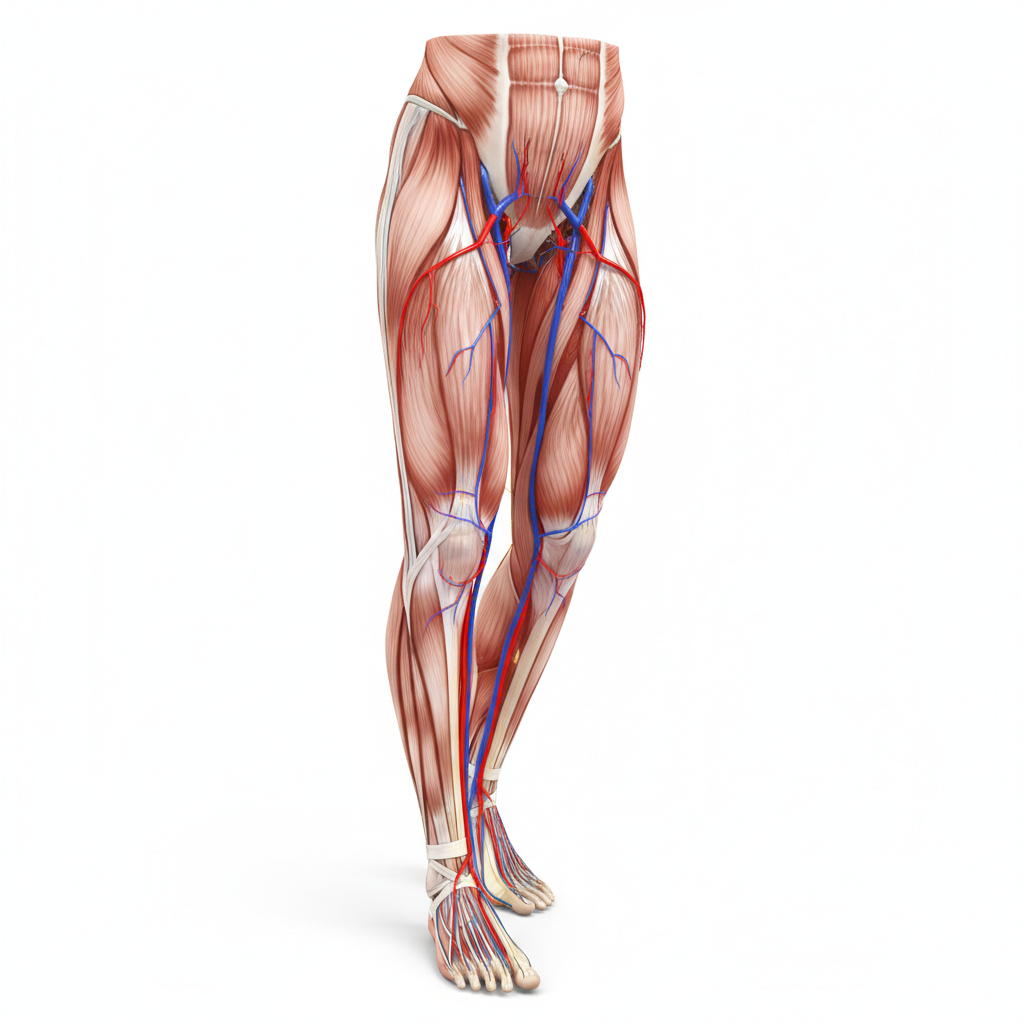
We can’t talk about muscle loss without talking about the “Big T” and Growth Hormone. For men and women alike, these levels dip. But before you run out and get injections, look at your sleep. I’ve seen guys jump their testosterone by 100 points just by getting 7 hours of sleep instead of 5. Sleep is when the “repair crew” comes out. If you’re cutting your sleep short, you’re firing the repair crew before they even clock in.
Also, don’t ignore the “anabolic window.” While the old-school bodybuilding “30-minute window” is mostly myth, for those over 50, the timing does matter more. Your body is more sensitive to nutrients right after a workout. This is the perfect time to use a glucose disposal agent like SLIN. It makes sure that the post-workout meal goes straight to the depleted muscle fibers rather than being stored. It’s like having a VIP pass at a crowded club; you get to bypass the fat-cell line and go straight to the muscle-building floor.
Addressing the Mental Hurdle of Getting Older
The biggest cause of muscle loss isn’t biological—it’s psychological. People start “acting their age.” They stop reaching for things, they stop pushing, and they start sitting more. This “disuse atrophy” is a self-fulfilling prophecy. I’ve seen 70-year-olds who look better than 40-year-olds because they refused to accept the “slow down” narrative. You need a comprehensive muscle solution that includes mindset. You have to believe your body is still capable of change. Because it is. I’ve seen it 100 times. Even if you haven’t lifted a weight in 20 years, your muscles have “memory.” They are waiting for the signal. Products like Muscle Plus can help give you that initial “oomph” to see results faster, which keeps you motivated to stay in the game.
What To Do Next
- Audit your protein: Aim for 1.2 to 1.5 grams of protein per kilogram of body weight. Don’t eyeball it; use an app like Cronometer for three days to see where you actually stand.
- Start Resistance Training: Minimum 3 days a week. Focus on compound movements: squats (even onto a chair), pushes (wall pushups are fine to start), and pulls.
- Fix Your Insulin Sensitivity: Reduce refined sugars and consider a supplement like SLIN to help manage how your body handles carbohydrates.
- Prioritize Essential Amino Acids: If your digestion is slow, use a pre-digested amino acid formula like Advanced Amino Formula to ensure absorption.
- Sleep 7-8 Hours: It’s non-negotiable. No sleep, no muscle. Period.
- Hydrate with Electrolytes: Dehydrated muscles are weak muscles. Add a pinch of sea salt and lemon to your water.
Questions People Actually Ask
Can I actually build muscle after 60, or is it just about maintenance?
You absolutely can build brand new muscle. A famous Tufts University study showed that even people in their 90s could significantly increase muscle size and strength through progressive resistance training. Your body never loses the ability to adapt; it just needs a louder “signal” to do so.
Is walking enough to stop muscle loss?
Honestly? No. Walking is great for your heart and mental health, but it doesn’t provide enough “load” to stop sarcopenia. You need to create tension in the muscle that forces it to adapt. You don’t need to be a powerlifter, but you do need to challenge your muscles with something heavier than your own body weight eventually.
Why do I feel so sore for days after a light workout?
As we age, our recovery markers (like satellite cell activation) slow down. This is why “intelligent” supplementation is key. Using something like Muscle Plus can help provide the specific building blocks to speed up that repair process so you aren’t sidelined for a week after one gym session.
Does protein powder work as well as real meat for seniors?
While whole foods are great, seniors often have lower stomach acid, making it harder to break down a steak. High-quality powders or amino acid supplements are often better because they are more “bioavailable,” meaning your body can actually use them without the digestive tax.
Article Excerpt
Waking up one day and realizing your strength has vanished is terrifying, but it’s not inevitable. Muscle loss after 50 is driven by a biological shift called sarcopenia, but with the right pillars—high-threshold protein intake, smart resistance training, and metabolic management—you can stop the decline in its tracks. The secret isn’t more hours in the gym; it’s better signals through nutrition and targeted supplementation like Advanced Amino Formula. Don’t let aging dictate your independence. Learn how to flip the switch from muscle-wasting to muscle-building starting today.
Related Topics to Explore
- How to Boost Testosterone Naturally After 50
- The Best Joint-Friendly Exercises for Seniors
- Anti-Inflammatory Diets That Actually Work for Muscle Growth
- Why Collagen Alone Isn’t Enough for Muscle Repair
Ending the Decline: Your New Chapter
Look, I’ve been in the trenches of digital marketing and health for over a decade, and if there’s one thing I know, it’s that people love to overcomplicate things. You don’t need a 20-step protocol. You need to eat enough protein, move heavy things safely, and give your body the tools it needs to recover. The muscle loss after 50 causes and solutions aren’t a mystery anymore—it’s just a matter of execution. If I were starting over at 55, I’d grab a bottle of Advanced Amino Formula, hit the gym three times a week, and stop worrying about “getting old.” You’ve got a lot of life left; make sure you’re strong enough to enjoy every bit of it.